Cost segregation data for Scottsdale, AZ investors
Interquartile range across 50 engine-modeled property scenarios matched to the Scottsdale, AZ investor profile. Year-1 savings shown are the federal benefit (37% + 3.8% NIIT). This state does not conform to federal bonus depreciation, so the state share is not accelerated; it recovers over standard MACRS.
Representative scenarios modeled via Cost Seg Smart's proprietary
engine — IRS ATG-aligned methodology, industry-standard 2026 construction cost data base costs,
calibrated metro multipliers. n=50 fixtures matched to
Scottsdale, AZ investor profile. Not derived from individual
client returns. Methodology v1.0.0, generated
May 2026 (reproducible seed: scottsdale-az_v1_2026-05-17).
Year-1 savings shown are the federal benefit only (37% + 3.8% NIIT). This state does not conform to federal §168(k) bonus depreciation, so the state share is deferred over standard MACRS rather than realized in Year 1; the federal benefit is unaffected. Confirm specifics with your CPA.
Tax law current as of May 2026. Federal: OBBBA restored 100% bonus depreciation under §168(k), permanent for property placed in service on or after January 20, 2025 (property placed in service January 1–19, 2025 remains at 40% under the prior phase-down); 2026+ stays 100%. State conformity varies; verify with your CPA.
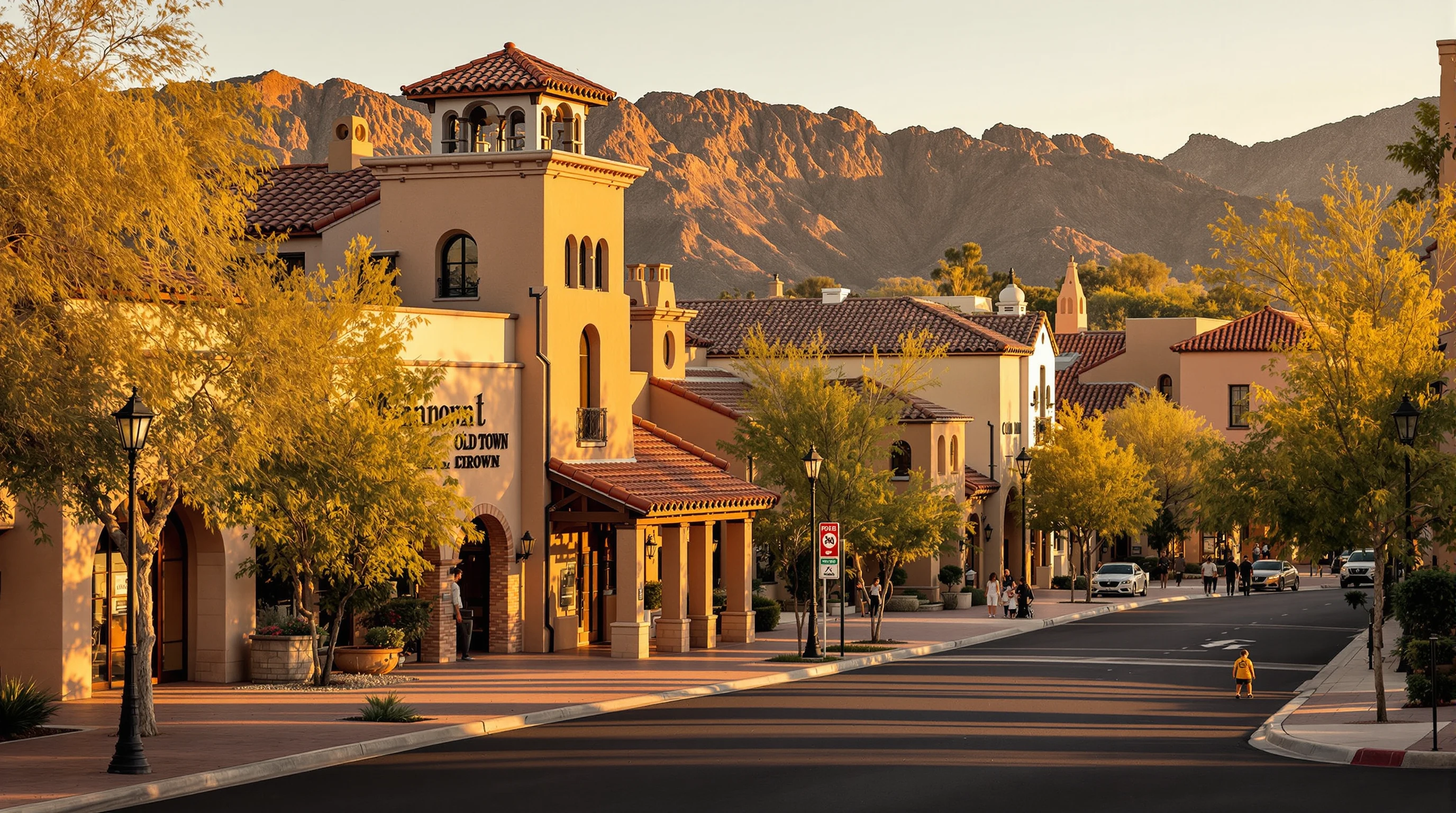
Scottsdale’s luxury desert STR market is defined by high FF&E spending — pools, spa features, outdoor kitchens, and designer furnishings that all qualify for accelerated depreciation.
- $240,000 Accelerated Depreciation
- $72,200 Est. Year-1 Tax Savings
- 91x Return on Study Cost
Want a number for a specific property here? Use the calculator — it’s pre-set with property-type defaults you can adjust to match your basis and tax bracket.
Cost Segregation in Scottsdale, AZ
Scottsdale Investment Snapshot
- Typical Price Range $700K–$1.5M
- Revenue Range $5,000–$12,000/mo gross STR revenue
- Common Property Types SFR, luxury estate, townhome
- State Income Tax 2.5%
- Top Neighborhoods Old Town, North Scottsdale, McCormick Ranch
- Typical Year-1 Savings $38,000–$72,000
The Scottsdale Market
Scottsdale competes on amenities, not price. The STR market caters to golf groups, bachelorette weekends, corporate retreats, and families seeking a private resort experience. Properties in Old Town draw walkability-focused guests, while North Scottsdale and the Desert Mountain corridor attract visitors who want pools, privacy, and mountain views. Typical purchase prices run $700K–$1.5M, with well-appointed homes grossing $80K–$150K annually depending on amenity level and bedroom count. We also run an Old Town vs North Scottsdale modeling tool at scottsdalecostseg.com for sizing the corridor difference.
Why Cost Segregation Hits Different in Scottsdale
What sets Scottsdale apart for cost segregation is the sheer volume of depreciable outdoor amenities. The competitive STR market demands private pools with automated systems, built-in spas, outdoor kitchens, fire pits, misting systems, desert hardscaping, and landscape lighting. Every one of these is a 5-year or 15-year MACRS asset. Inside, the luxury furnishing packages push the 5-year personal property allocation above 20% of basis in many properties. For a city-specific breakdown of the desert FF&E and outdoor-amenity reclassifications that Scottsdale Airbnb hosts typically capture, see the Scottsdale desert-amenity reclass walkthrough at scottsdaleairbnbtax.com.
Worked Example — Scottsdale
Take a $1M home in North Scottsdale — a 4-bedroom with a heated pool, spa, outdoor kitchen, fire pit, and professionally designed interior. The depreciable basis after land is roughly $800K. A cost segregation study reclassifies approximately $240K into shorter MACRS classes: about $168K in 5-year property (furniture, appliances, pool equipment, spa fixtures, outdoor kitchen, cabinetry, decorative lighting, smart-home systems) and $72K in 15-year property (desert hardscaping, irrigation, driveway, retaining walls, landscape lighting, fencing).
Who Is Doing This in Scottsdale
The typical Scottsdale STR investor is a high-income professional — often a physician, tech executive, or business owner — who uses the property 2–4 weeks per year and rents it through a management company the rest. Material participation is achievable if you retain control of pricing strategy, booking approvals, vendor selection, and property improvement decisions. Most owners coordinate these through apps and email, easily clearing 100 hours annually.
AZ Tax Considerations
- Arizona levies a flat 2.5% state income tax — one of the lowest rates in the country. Scottsdale investors capture nearly all of their cost segregation benefit at the federal level. Arizona does not conform to federal §168(k) bonus depreciation (A.R.S. §43-1021 add-back). The federal Year-1 deduction is fully available; the Arizona share is not accelerated and recovers over standard 5/7/15-year MACRS (deferred, not lost). See bonus depreciation by state.
- Your estimate $72,200 Estimated Year-1 federal tax savings (AZ share deferred over MACRS)
- $240,000 Accelerated
- 91x ROI on study
- Adjust Your Numbers →
Based on a $1,000,000 Scottsdale property at the 37% federal bracket. Your actual results vary.
Want a number for a specific property here? Use the calculator — it’s pre-set with property-type defaults you can adjust to match your basis and tax bracket.
Common Scottsdale Investment Properties
- Luxury desert estates with resort-style pools and spas
- Old Town walkable condos and townhomes near nightlife
- North Scottsdale golf-course-adjacent homes
- Modern mid-century renovations in McCormick Ranch
Depreciable Features We Commonly See
- Pool shells, automated pool equipment, and spa fixtures
- Outdoor kitchens with built-in grills and bar seating
- Desert hardscaping, xeriscaping, and landscape lighting
- Custom interior furnishing packages and designer finishes
- Fire pits, misting systems, and covered patio structures
What People Worry About (and What Actually Happens) “Will this trigger an IRS audit?”
No. Cost segregation is explicitly supported by IRS guidelines (Rev. Proc. 87-56) and the IRS Audit Techniques Guide for Cost Segregation. Tens of thousands of studies are filed every year. Our reports are designed to withstand scrutiny — that’s why they run 40+ pages with component-level documentation.
audit risk and cost segregation → “Is this aggressive tax strategy?”
Cost segregation is standard practice, not a loophole. The IRS has published formal guidance on how to do it correctly. Every Big 4 accounting firm offers it. We follow the same engineering-based methodology — just faster and at a fraction of the cost.
our engineering methodology → “What if I sell in a few years?”
You’ll owe depreciation recapture at 25% on the accelerated portion when you sell. But if you 1031 exchange into another property, recapture is deferred indefinitely. For most investors, the upfront tax savings far outweigh the eventual recapture — especially when you factor in the time value of money. “My CPA hasn’t mentioned this.”
Most CPAs know about cost segregation but don’t proactively recommend it because they don’t do the engineering analysis in-house. That’s what we provide. Your CPA files the results — we email them a CPA-ready package with everything they need, and we answer any questions they have directly.
Why Cost Segregation Works for Short-Term Rentals
Short-term rentals contain a higher concentration of depreciable personal property than almost any other residential property type. Furniture, appliances, linens, kitchenware, electronics, decorative fixtures, and specialty items like hot tubs or game room equipment all qualify as 5-year property under the IRS MACRS classification system. This furniture, fixtures, and equipment (FF&E) component typically represents 15-20% of the depreciable basis.
Beyond interior components, site improvements add additional reclassification value. Driveways, walkways, patios, outdoor lighting, fencing, landscaping, and irrigation systems fall into the 15-year MACRS class rather than the default 27.5-year residential schedule. For STR properties with pools, outdoor kitchens, or fire pits, these components can represent a meaningful share of the total reclassified amount.
With 100% bonus depreciation permanently restored under the One Big Beautiful Bill Act (signed July 2025), every dollar reclassified into 5-year, 7-year, or 15-year MACRS classes is deductible in full in the first year. For STR owners who materially participate in their rental operation, these accelerated deductions can offset W-2 and business income — not just passive rental income.
Who This Example Applies To
- Airbnb, Vrbo, or short-term rental property owners
- Investors who materially participate in their STR operation (100+ hours/year)
- Taxpayers in the 32-37% federal bracket (where savings are most significant)
- Properties with furniture, appliances, and guest-ready finishes
If your property is a passive investment managed entirely by a third party, the accelerated depreciation may only offset passive income. If your property has minimal furnishings or you plan to sell within 1-2 years, the benefit may be reduced. Actual results vary based on property age, condition, renovations, and local construction costs.
Hear From a Short-Term Rental Owner Who Did This
This Airbnb investor ordered a cost segregation study and used the accelerated depreciation on their next tax return. Here’s what happened. Money-Back Guarantee Full refund if the study doesn’t save you money See a Sample Download Scottsdale sample report
Compare: Scottsdale Airbnb at Different Price Points
| Price | Accelerated | Tax Savings | Study Cost | ROI |
| $300K | $72,000 | $26,640 | $895 | 30x |
| $500K | $120,000 | $44,400 | $895 | 50x |
| $750K | $180,000 | $66,600 | $995 | 67x |
| $1M | $240,000 | $72,200 | $1,295 | 56x |
| $400K | $96,000 | $35,520 | $895 | 40x |
| $600K | $144,000 | $53,280 | $895 | 60x |
| $1.5M | $360,000 | $133,200 | $1,595 | 84x |
| $450K | $108,000 | $39,960 | $895 | 45x |
| $700K | $168,000 | $62,160 | $995 | 62x |
| $800K | $192,000 | $71,040 | $995 | 71x |
Compare: $1,000,000 Across Property Types
| Property Type | Accelerated | Tax Savings | Study Cost | ROI |
| Airbnb / Short-Term Rental | $240,000 | $72,200 | $895 | 81x |
| Multifamily | $176,000 | $65,120 | $995 | 65x |
| Rental Property | $160,000 | $59,200 | $895 | 66x |
| Office | $142,500 | $52,725 | $895 | 59x |
Frequently Asked Questions What is a cost segregation study? ▼
A cost segregation study is an engineering-based analysis that reclassifies components of your property into shorter IRS depreciation categories (5, 7, and 15 years) instead of the default 27.5 or 39 years. This accelerates your depreciation deductions, reducing your tax bill in the early years of ownership. Why do Airbnbs get higher cost segregation deductions? ▼
Short-term rentals are typically furnished with furniture, appliances, electronics, linens, kitchenware, and décor — all of which qualify as 5-year personal property under MACRS. This FF&E (furniture, fixtures, and equipment) often represents 15-20% of the property’s depreciable basis, significantly increasing the accelerated depreciation amount compared to unfurnished long-term rentals. What is material participation and why does it matter? ▼
Material participation means you’re actively involved in your rental operation — managing bookings, communicating with guests, coordinating maintenance, and making business decisions. If you spend 100+ hours on these activities and nobody else spends more time than you, the IRS treats your rental as non-passive. This allows you to deduct the accelerated depreciation against your W-2 or business income, not just rental income.
Learn More About Cost Segregation
- What Is Cost Segregation? — Full explanation of how the study works and what you receive
- How Much Does a Cost Segregation Study Cost? — Pricing breakdown by property type and value
- What Percentage Gets Reclassified? — Typical accelerated depreciation rates by property type
- Cost Segregation for Short-Term Rentals — The STR material participation strategy explained
Ready to See Your Actual Savings?
Want a number for a specific property here? Use the calculator — it’s pre-set with property-type defaults you can adjust to match your basis and tax bracket.
How should Scottsdale, AZ investors choose a cost segregation provider?
For a Scottsdale, AZ investor buying a property in the $875,000 range, the choice of study provider is the single biggest controllable variable in the ROI. The methodology is fixed by IRS Audit Techniques Guide rules (industry-standard construction cost data, MACRS classification, engineering-based component reclassification) — what varies is delivery cost and turnaround time.
Traditional engineering studies often run several thousand dollars and can take several weeks, because they include on-site inspections, sales discovery calls, and scheduling overhead. The IRS Cost Segregation Audit Techniques Guide does not require a physical site visit; it requires engineering-based classification with industry-calibrated cost derivation and component-level documentation.
Modern automated providers (such as Cost Seg Smart) deliver the same IRS ATG–aligned study for $495–$1,595 in under one hour, using satellite imagery, county assessor data, and the same industry-standard construction cost databases. For a Scottsdale, AZ investor at the metro's combined bracket, that cost delta typically exceeds the study cost itself by several times over. The CPA-Ready Guarantee (full refund if the report can't be used by your CPA) plus the 60-day money-back policy makes the decision essentially risk-free on the report itself.
The automated path is best-fit for Scottsdale, AZ investors who: own residential STR property valued under $2M, are comfortable uploading closing docs + property photos online (no in-person visit required), and want the report in time to file the current year's return rather than the next one.
| Property value | Cost Seg Smart | Traditional firm |
|---|---|---|
| <$300K | $495 | Traditional engineering firms typically charge several thousand dollars per study, with a 4–8 week turnaround and an on-site visit. |
| $300K–$700K | $895 | |
| $700K–$1M | $995 | |
| $1M–$1.5M | $1,295 | |
| $1.5M–$2M | $1,595 | |
| $2M–$3M | $1,995 | |
| Commercial (under $1M) | $1,995 |
All Cost Seg Smart studies include the CPA-Ready Guarantee (full refund if your CPA can't use the report) plus a 60-day money-back policy. Reports are delivered in under one hour with no on-site visit required.