Cost Segregation Percentages by Property Type (What to Expect)
How much of a property actually reclassifies into faster depreciation? Observed ranges by type: STR 24 to 35 percent, SFR 16 to 22 percent, multifamily 18 to 28 percent, commercial 12 to 25 percent. See where yours likely lands, plus the Year-1 deduction math.
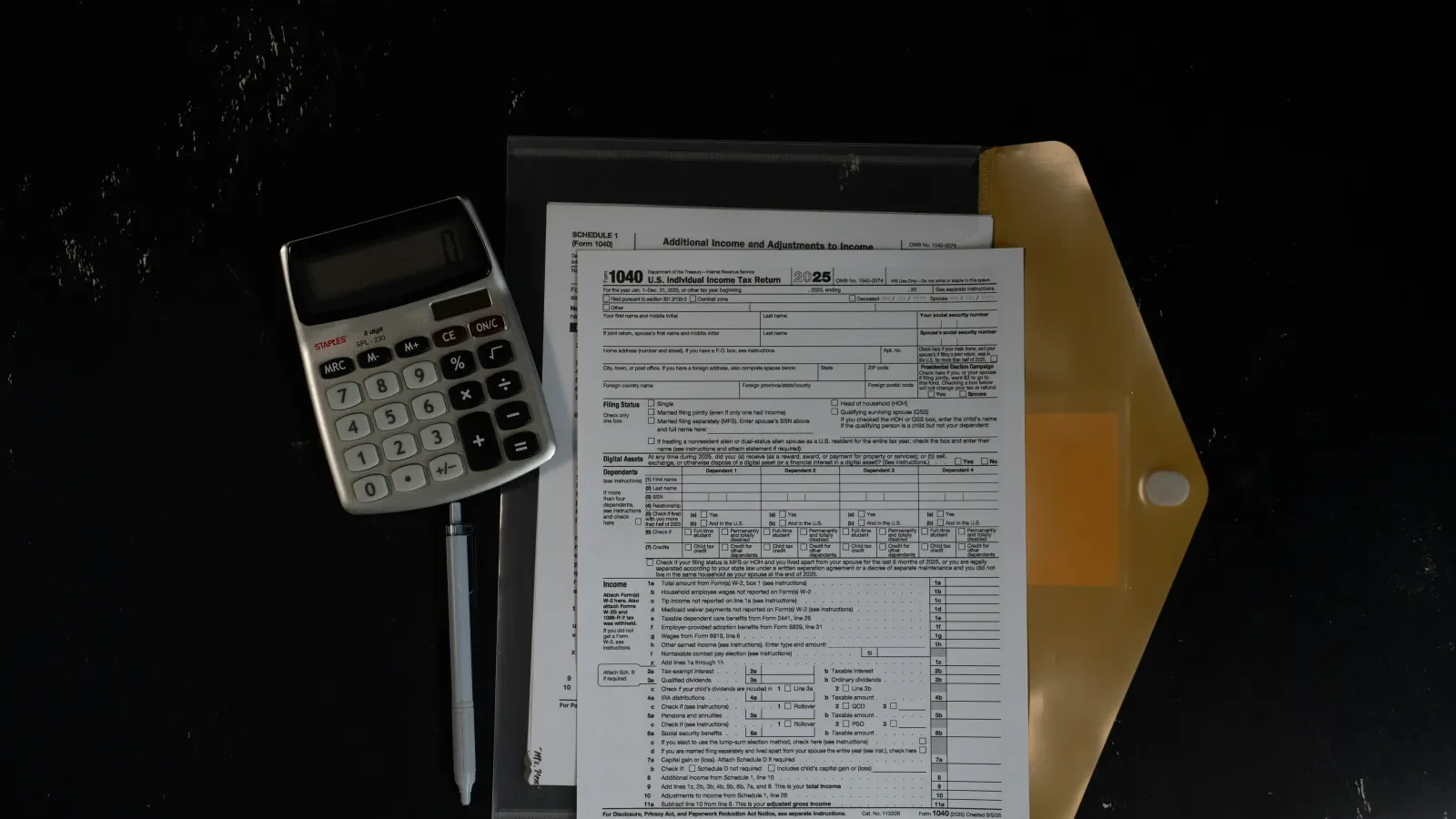
How much of a property actually reclassifies into faster depreciation? Observed ranges by type: STR 24 to 35 percent, SFR 16 to 22 percent, multifamily 18 to 28 percent, commercial 12 to 25 percent. See where yours likely lands, plus the Year-1 deduction math.
Realistic cost segregation reclassification rates by property type: Single-family rentals typically reclassify 15 to 22 percent of depreciable basis into shorter MACRS asset classes. Short-term rentals (Airbnb and VRBO) reclassify 22 to 32 percent because furnished properties contain significant furniture, fixtures, and equipment qualifying as 5-year personal property. Multifamily buildings (duplexes through 100+ unit complexes) reclassify 18 to 28 percent, with larger buildings toward the high end due to common area systems, parking, and site improvements. Commercial properties (office, retail, industrial) reclassify 12 to 25 percent depending on tenant improvements and specialty mechanical systems. New construction typically reclassifies 25 to 35 percent because component costs are well-documented from construction records. Claims of 40 to 50 percent reclassification on standard properties are marketing, not engineering — the actual percentage depends on building age, construction type, land allocation, and property use. These ranges are based on completed cost segregation studies using industry-standard construction cost data and IRS MACRS classification under Rev. Proc. 87-56. For how these percentages translate into dollars, see cost segregation study cost. The 30-Second Answer
- Single-family rentals: 16–22% reclassified
- Short-term rentals (Airbnb): 24–35%
- Multifamily 2–100+ units: 18–28%
- Office / retail / industrial: 12–25%
On a typical $500K STR, 28% reclassification = ~$140K in accelerated first-year depreciation. Run your property →
The Internet Lies About Cost Seg Percentages
If you’ve spent 10 minutes researching cost segregation online, you’ve probably seen claims like “40–50% accelerated depreciation on any property.” That’s marketing, not engineering.
The reality is more boring and more useful. Most properties don’t hit 40%. Most properties shouldn’t hit 40%. And if a firm is promising you 40%+ on a standard single-family rental with no major renovation, you should be asking some pointed questions about their methodology—or their relationship with the truth.
Here’s why the internet is full of inflated numbers. Firms cherry-pick their best results. That 48% number in the case study? It was a fully furnished luxury STR in Scottsdale with a pool house, outdoor kitchen, and $150K in custom millwork. They don’t mention that the next ten studies they did averaged 19%. They also love to conflate different metrics. “Accelerated depreciation percentage” (what portion of your depreciable basis gets reclassified) is not the same as “tax savings percentage” (what you actually save in dollars relative to your purchase price). Mixing these up—intentionally or not—makes the numbers look better than they are.
Some firms also use pre-renovation numbers. “We found $400K in accelerated depreciation!”—yeah, on a $2M gut renovation where you ripped out every wall and installed new everything. The renovation itself is the accelerated depreciation. That’s not a typical cost seg result; that’s a construction project with a tax study stapled to it.
None of this means cost segregation isn’t valuable. It absolutely is. A $500K SFR that gets 20% accelerated is still pulling $80K into Year 1 deductions—that’s roughly $30K in federal tax savings at the 37% bracket. That’s real money. But it’s not 50%, and pretending it is sets up unrealistic expectations that make investors question the entire process when their study comes back with honest numbers.
The best cost segregation study isn’t the one with the highest percentage. It’s the one that produces numbers your CPA can file with confidence and that will hold up if the IRS ever looks at it.
What Our Studies Actually Show (The Real Data)
Here’s the part where we put our own numbers on the table. These ranges come from our engineering-based studies using industry-standard construction cost data, IRS MACRS classification rules, and component-level analysis. They’re not aspirational. They’re what actually comes out of the engine for typical properties without major renovations or unusual features.
“Accelerated %” means the portion of your depreciable basis (purchase price minus land) that gets reclassified from the default 27.5-year (residential) or 39-year (commercial) schedule into 5-year, 7-year, or 15-year MACRS recovery periods. With 100% bonus depreciation under the One Big Beautiful Bill Act, these accelerated components can be deducted in full in Year 1.
Important clarification: all percentages below refer to the depreciable basis (purchase price minus land), not the total purchase price. In most cases, this translates to roughly 10–25% of the total purchase price being accelerated, depending on land allocation.
| Property Type | Typical Accelerated % | Worth Reviewing If Above | Why |
|---|---|---|---|
| SFR (single-family rental) | 18–22% | 30% | Plain vanilla SFR without major reno |
| STR / Airbnb | 25–35% | 42% | FF&E pushes this higher—furnished = more 5yr property |
| Condo (long-term) | 10–15% | 22% | You don’t own the shell or site work |
| Condo STR | 20–28% | 35% | FF&E helps but shell constraints remain |
| Duplex / Triplex / Fourplex | 15–20% | 28% | Per-unit costs but shared systems |
| Multifamily (5+) | 18–25% | 32% | Scale effects, shared systems, more site work |
| Office | 22–30% | 40% | Data/telecom, specialty electrical drive it up |
| Restaurant | 28–35% | 45% | Kitchen equipment is the big driver |
| Retail | 22–30% | 40% | Tenant buildout, specialty lighting |
| Industrial / Warehouse | 12–20% | 30% | Mostly site work, minimal interior finish |
A few things to notice. First, there’s a wide range within each type. A 1995 SFR with original carpeting and a big deck will hit the high end. A 2022 new-build SFR with hardwood floors and a small patio will hit the low end. Age matters. Finishes matter. Site improvements matter. Plug your purchase price into the cost segregation calculator to see where your property lands inside these ranges.
Second, the “Worth Reviewing If Above” column is important. If a firm hands you a study showing 35% accelerated on a standard unfurnished SFR, something is probably wrong. Either they’re classifying structural components (framing, foundation, roofing) as personal property—which is aggressive and indefensible—or their land allocation is too high, inflating the depreciable basis relative to the building components. Both are problems waiting to surface during an audit.
Third, notice how much property type matters. A restaurant at 30% and a condo at 12% are both honest numbers. The restaurant has commercial kitchen equipment, walk-in coolers, exhaust hoods, and specialty plumbing—all 5-year or 7-year property. The condo owner doesn’t own the roof, the foundation, the exterior walls, or the parking lot. Less building to segregate means a lower percentage. That’s not a flaw in the study. That’s physics.

The 15-Year Stuff Nobody Talks About
Everyone obsesses over 5-year personal property. It’s the sexy bucket. Appliances, carpeting, cabinetry, furniture in STRs—these are the line items that get highlighted in cost seg marketing because they sound tangible and the depreciation period is short.
But 15-year land improvements are often 8–12% of the depreciable basis, and they’re some of the most defensible reclassifications in any study. The IRS rarely pushes back on 15-year property because the classification is straightforward. A driveway is a land improvement. A retaining wall is a land improvement. There’s no ambiguity.
Here’s what qualifies as 15-year property under IRC §168:
- Driveways and parking areas—asphalt, concrete, gravel, pavers
- Walkways and sidewalks—any paved path on the property
- Fencing and gates—wood, vinyl, chain-link, wrought iron
- Landscaping—trees, shrubs, sod, flower beds, irrigation systems
- Retaining walls—especially common on hillside properties
- Exterior lighting—pathway lights, security lights, decorative fixtures
- Patios, decks, and porches—when not structurally integrated into the building
- Swimming pools and hot tubs—in-ground pools are 15-year; portable hot tubs are often 5-year
- Outdoor kitchens and fire pits
All of these are bonus-eligible under IRC §168(k). With 100% bonus depreciation currently available for qualifying property placed in service in 2025 and beyond, a $40K driveway and $15K of landscaping gets deducted in full in Year 1—not spread over 15 years.
For properties with significant outdoor features—a Smoky Mountain cabin with a wraparound deck, a Scottsdale rental with a pool and desert landscaping, a farmhouse-style STR with extensive hardscaping—the 15-year bucket can actually be larger than the 5-year bucket. We see this regularly. A property might have 12% in 5-year and 14% in 15-year. The 15-year property is doing more heavy lifting than the appliances and carpet, but it never makes the marketing brochure.
Don’t ignore the 15-year bucket. For properties with driveways, pools, decks, fencing, or extensive landscaping, 15-year land improvements can account for more accelerated depreciation than 5-year personal property—and they’re among the most audit-resistant classifications in a cost seg study.

The Land Allocation Problem (This Is Where Studies Go Wrong)
Here’s the dirty secret of cost segregation: the land allocation drives everything, and most investors never question it.
Land value is subtracted from your purchase price before anything else. You can’t depreciate land—the IRS is clear on this. So the first step in any cost seg study is figuring out what percentage of your purchase price is attributable to the land underneath the building. Whatever’s left is your depreciable basis, and that’s what gets segregated into 5/7/15/27.5/39-year buckets.
If the land percentage is wrong, the entire study is wrong. Every dollar of error in land allocation flows through to every component in the study.
Let’s make this concrete. Take a $500,000 property:
| Scenario | Land % | Depreciable Basis | Accelerated @ 20% |
|---|---|---|---|
| Low land | 15% | $425,000 | $85,000 |
| Medium land | 25% | $375,000 | $75,000 |
| High land | 40% | $300,000 | $60,000 |
| Coastal premium | 60% | $200,000 | $40,000 |
Same property. Same accelerated percentage. But the dollar amount swings from $40K to $85K depending on land allocation. That’s a $45,000 difference—and it’s all in the land assumption, not the engineering.
County assessors vary wildly. Rural Tennessee might assess land at 10–15% of total value. Coastal California can be 70–85%. A suburb of Nashville might be 25%. Downtown Manhattan might be 90%. Flat assumptions are lazy. A firm that uses “20% land” on every property is wrong in both directions—underallocating land in expensive markets (which inflates the study and creates audit risk) and overallocating land in rural markets (which leaves legitimate deductions on the table).
Our approach: we pull county assessor data where available, cross-reference it with statistical models built on metro-level land ratios, and apply property-specific adjustments based on lot size, location, and market comparables. When the assessor data looks unreliable (and it often does—some counties haven’t updated their models in a decade), we flag it and use statistical methods with appropriate dampening. When a customer provides their own land value from a closing document or appraisal, we use that as the primary source because it’s the most defensible number in an audit.
The point isn’t that our land allocation is perfect. It’s that it’s methodical, documented, and defensible. A flat 20% assumption is none of those things.
What Actually Triggers an IRS Problem
Let’s clear something up: doing a cost segregation study does not trigger an audit. The IRS has explicitly acknowledged cost segregation as a legitimate tax strategy. Their own Cost Segregation Audit Techniques Guide (ATG) is essentially an instruction manual for how these studies should be done. They wrote 200+ pages about it. They expect people to do it.
What triggers problems isn’t cost segregation itself—it’s cost segregation done badly. The IRS ATG identifies 13 principal elements of a quality study. Here’s where firms actually get investors in trouble:
No engineering basis. Some firms don’t do component-level analysis at all. They apply a flat percentage based on property type—“all SFRs get 20% accelerated”—and call it a study. That’s not engineering. That’s a template. The IRS has specifically flagged this approach as deficient. A quality study identifies and costs each component individually using recognized cost databases.
Classifying structural components as personal property. This is the big one. Foundation, load-bearing walls, roofing, and the structural frame of a building are 27.5-year (residential) or 39-year (commercial) property. Period. Reclassifying structural steel as 5-year property because it “supports” the HVAC system is the kind of aggressive position that unravels under scrutiny. When you see studies with 40%+ accelerated on a standard building, this is usually how they got there.
Unreasonable land allocation. As we covered above. A $3M beachfront property with 10% land allocation will raise eyebrows. So will a rural property with 60% land. The allocation needs to reflect reality and be supported by data.
No component-level detail. The IRS expects to see a breakdown of every reclassified component—what it is, how much it costs, what recovery period it belongs to, and why. A study that says “5-year property: $87,000” with no backup is not a study. It’s a number on a page.
Our studies use industry-standard construction cost data (the industry standard construction cost database), classify every component per IRS Revenue Procedure 87-56 and the ATG, and produce 40+ page reports with component-level schedules. Not because we enjoy writing long PDFs, but because that’s what holds up if the IRS ever asks questions.
One more thing worth mentioning: 100% bonus depreciation is back permanently. The One Big Beautiful Bill Act, signed in July 2025, restored 100% first-year bonus depreciation for all qualifying property placed in service in 2025 and beyond under IRC §168(k). The phase-down (80% in 2023, 60% in 2024) is over. Every dollar of 5-year, 7-year, and 15-year property identified in a cost seg study can be deducted in full in Year 1. That makes the quality of the underlying study even more important—because the Year 1 deduction is now the full amount, not a fraction of it.

So What Should You Actually Expect?
Let’s run three scenarios with honest numbers. These assume 100% bonus depreciation (currently available for 2025+), reasonable land allocation, and no major renovations. Just a standard property, properly analyzed.
Scenario 1: $500K single-family rental in Nashville
| Item | Amount |
|---|---|
| Purchase price | $500,000 |
| Land allocation (20%) | $100,000 |
| Depreciable basis | $400,000 |
| Accelerated components (~20%) | $80,000–$88,000 |
| Year 1 deduction (100% bonus) | $80,000–$88,000 |
| Federal tax savings at 37% | $30,000–$33,000 |
Not life-changing in percentage terms. But $30K–$33K is a lot of real dollars. That’s two years of property insurance. That’s a new HVAC system. That’s your entire closing cost recovered through tax savings alone.
Scenario 2: $500K furnished Airbnb in the Smokies
| Item | Amount |
|---|---|
| Purchase price | $500,000 |
| Land allocation (12%) | $60,000 |
| Depreciable basis | $440,000 |
| Accelerated components (~25–32%) | $110,000–$140,000 |
| Year 1 deduction (100% bonus) | $110,000–$140,000 |
| Federal tax savings at 37% | $41,000–$52,000 |
STRs hit higher because furniture, appliances, hot tubs, game room equipment, linens, kitchenware—it’s all 5-year property. A mountain cabin with four furnished bedrooms, a game room, and a hot tub on a deck has significantly more short-life property than an unfurnished long-term rental. The math reflects that. And if you materially participate (100+ hours/year managing the property), these losses can offset your W-2 income.
Scenario 3: $500K condo in a resort town
| Item | Amount |
|---|---|
| Purchase price | $500,000 |
| Land allocation (25%) | $125,000 |
| Depreciable basis | $375,000 |
| Accelerated components (~10–15%) | $38,000–$56,000 |
| Year 1 deduction (100% bonus) | $38,000–$56,000 |
| Federal tax savings at 37% | $14,000–$21,000 |
Condos are the lowest of the residential types, and that’s not a knock on the study—it’s a reflection of what you actually own. You don’t own the roof. You don’t own the foundation. You don’t own the exterior walls, the parking lot, or the elevator. Your depreciable basis is essentially the interior: flooring, cabinetry, appliances, fixtures, and whatever portion of the mechanical systems serves your unit. Less building to segregate means a lower percentage. If a firm tells you they can get 30% accelerated on a standard condo, ask them which structural components they’re reclassifying—and whether they’d be comfortable defending that to the IRS.
These numbers are real, not exciting. But they’re defensible and they’ll hold up. The question isn’t how big the deduction is. It’s whether the deduction survives scrutiny. A $30K tax savings that stands up to an audit beats a $60K tax savings that gets reversed with penalties every single time. Browse a full sample cost segregation report to see how these percentages translate into a finished, CPA-ready document.
The ROI on a cost seg study isn’t about the percentage—it’s about the ratio of tax savings to study cost. A $895 study that produces $30K in tax savings is a 34:1 return. Even a condo study at $14K savings is a 16:1 return. The economics work at real-world percentages. You don’t need inflated numbers to justify the investment. See how much a cost segregation study costs across provider types for the full pricing breakdown. Should You Do This?
A cost seg study probably makes sense if any of these are true:
- → You bought or placed the property in service in the last 1–7 tax years and haven’t done a study yet (you can do a lookback study via Form 3115).
- → Your purchase price is at least $250K. Below that, the study fee eats too much of the savings.
- → You have rental income to offset, OR it’s a short-term rental where you materially participate (100+ hours/year) and want to offset W-2 income.
- → You have a Year-1 tax bill the deduction can actually reduce. (No tax bill, no benefit.)
It probably doesn’t make sense if you paid under $200K, you’re a passive investor with no offsetting income (passive losses can’t offset W-2 without REPS or STR material participation), or you’re in a low tax bracket where the savings won’t clear the study fee. Run your numbers in 60 seconds → · Order your study → · See a finished sample report
Scenarios above are illustrative. Outcomes depend on property type, land allocation, tax bracket, and participation level. Confirm with your CPA before filing.
Related Reading
- How Much Does a Cost Segregation Study Cost? (2026 Pricing Guide)
- How to Choose a Cost Segregation Company (Without Overpaying)
- How Cost Segregation Affects the 2% Rule in Real Estate Investing
- Every Component in a Cost Segregation Study: The Complete MACRS Reference
- Scoring methodology used to rank 27 providers — see the rubric (engineering basis, MACRS classification, ATG alignment, documentation depth) at costsegregationreviews.com
See Your Actual Depreciation Numbers
Engineering-based cost segregation studies delivered in under an hour. Real percentages, real component data, CPA-ready reports. Preview Your Tax Savings in 60 Seconds →