Boston's triple-deckers — the region's iconic 3-unit investment property — are textbook cost segregation candidates. Three kitchens, three bathrooms, and multiple HVAC/plumbing systems per building push reclassification to 28–32% of basis. On a $900K triple-decker in Dorchester or Somerville, that's $60K+ in accelerated Year 1 deductions. Massachusetts earners over $1M pay 5% state plus a 4% surtax — combined federal+state savings can hit 46%.
The Triple-Decker: New England's Perfect Cost Seg Candidate
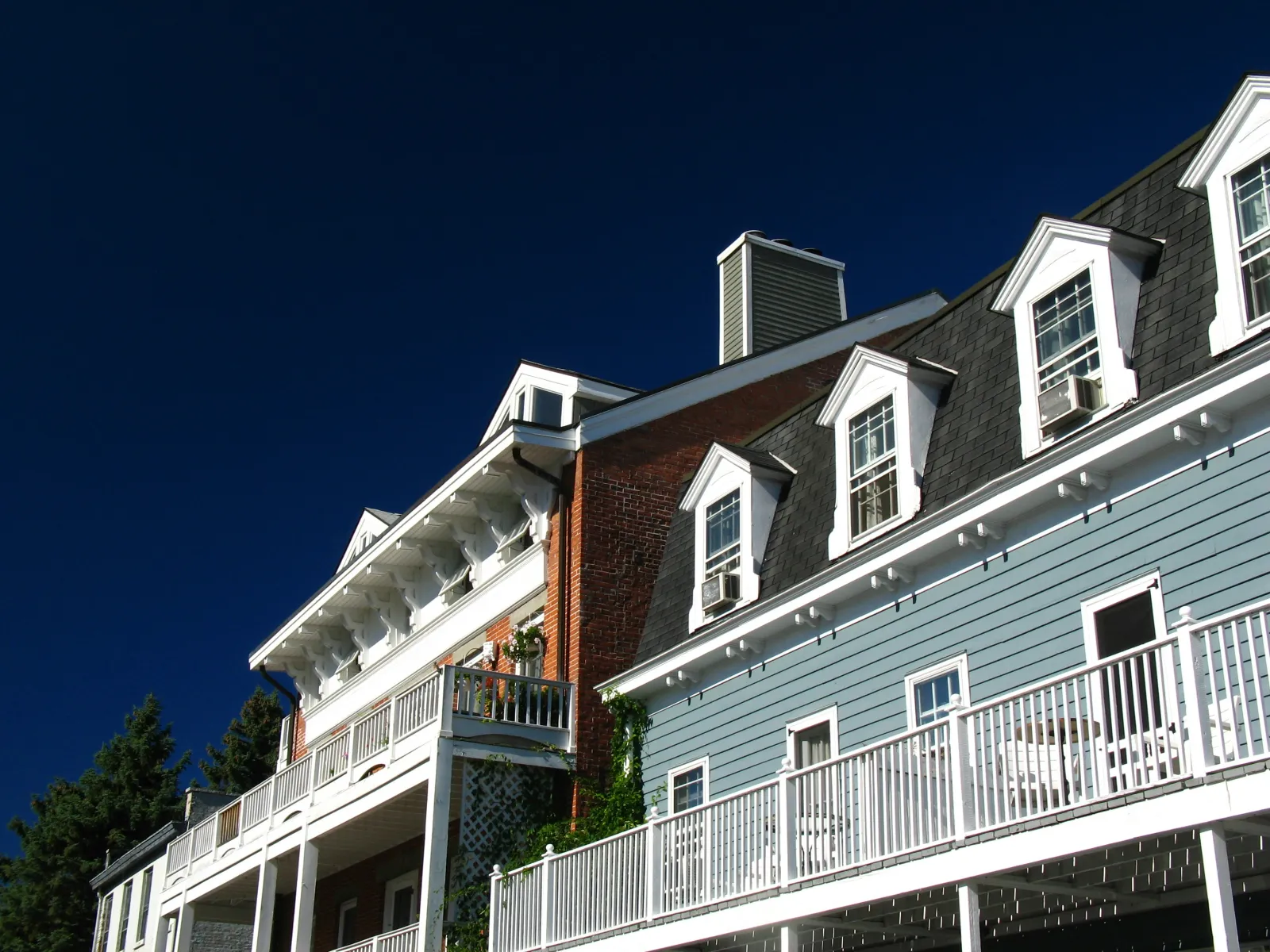
Boston's triple-decker is the quintessential New England investment property. Three stacked units, each with its own kitchen, bathroom, and living space, typically built between 1890 and 1930. Neighborhoods like Dorchester, Somerville, Revere, and Brockton are defined by these buildings. And from a cost segregation perspective, they're close to ideal: three sets of kitchens, three sets of bathrooms, three sets of fixtures, flooring, and appliances—all reclassifiable to shorter depreciation schedules.

The median triple-decker in Greater Boston sells for $800,000-$1,200,000 depending on condition and neighborhood. In Somerville and Cambridge, prices push past $1.5M. That's a substantial depreciable basis, and if you're using straight-line depreciation over 27.5 years, you're spreading those deductions across nearly three decades instead of front-loading them.
A cost segregation study changes the timeline. With 100% bonus depreciation permanently restored under the One Big Beautiful Bill Act, all reclassified components—5-year, 7-year, and 15-year property—can be deducted in full in Year 1.
Boston Real Estate Market Snapshot
$825,000
$700,000
$48,000
1.08%
5.0% flat + 4% surtax over $1M
High
High-value market with strong rental demand. Top investment areas: Back Bay, South End, Beacon Hill, Cambridge.
Source: Public assessor data, Zillow, AirDNA estimates. Values are approximate metro-area medians.
Massachusetts's 5% Flat Tax: State Conformity Matters
Massachusetts charges a flat 5% income tax (9% on short-term capital gains). The state generally conforms to federal depreciation rules, including Section 168(k) bonus depreciation. That means accelerated depreciation from a cost seg study reduces both your federal and Massachusetts state tax liability.
For a Boston investor in the 37% federal bracket, the combined rate is approximately 42%. Every $100,000 in accelerated depreciation saves roughly $42,000 in combined taxes. Additionally, Massachusetts recently implemented a 4% surtax on income over $1 million—bringing the effective state rate to 9% for high earners. For those investors, the combined rate approaches 46%, making cost segregation even more impactful.
Massachusetts's "millionaire's tax" (4% surtax on income over $1M) means high-earning Boston investors face up to 46% combined rates. Every dollar of accelerated depreciation is worth almost $0.46 in tax savings.

A Real Example: Triple-Decker in Dorchester
The property: A three-unit triple-decker in Dorchester (02124), purchased in May 2023 for $975,000. Built in 1915, renovated kitchens and bathrooms in 2021. Units rent at $2,400, $2,200, and $2,100/month. The owner is a physician at Mass General with W-2 income of $380,000.
Without cost segregation: Depreciable basis (after 15% land for urban Suffolk County) is approximately $829,000. Straight-line: $30,145 per year.
With cost segregation:
| Category | Amount | Year 1 Deduction |
|---|---|---|
| 5-Year Property (3 kitchens, 3 baths, flooring, fixtures, appliances, lighting) | $174,100 | $174,100 (100% bonus) |
| 15-Year Property (porch, sidewalks, driveway, fencing, landscaping) | $41,500 | $41,500 (100% bonus) |
| 27.5-Year Property (remaining wood-frame structure) | $613,400 | $22,310 (straight-line) |
| Total Year 1 Accelerated Deductions | $215,600 |
At a 42% combined rate, that's approximately $90,550 in estimated combined tax savings. The pre-1920 construction date and three full units of reclassifiable components push the total well into six-figure deduction territory.
Boston-Area Investment Neighborhoods
Greater Boston's construction cost index is approximately 1.20 relative to national average. The component-to-basis ratios remain favorable for cost segregation.
Dorchester / Mattapan (02121-02126, 02136): The triple-decker heartland. Purchase prices: $750K-$1.1M for three-units. Older construction with high reclassification rates. Active investor market with renovation-driven value-add plays.
Somerville / Cambridge (02143, 02144, 02138): Premium rents near Harvard, MIT, and Kendall Square. Triple-deckers here sell for $1.2M-$1.8M. The high basis generates proportionally larger absolute deductions.
South Boston / East Boston (02127, 02128): Rapidly appreciating neighborhoods with strong condo conversion activity. Investors buying and holding rental condos here have significant interior component reclassification potential.
Worcester / Springfield / Brockton: Gateway cities with triple-deckers available under $500K. Excellent cash flow markets where cost seg deductions materially improve after-tax returns. Even a $400K triple-decker generates $65K-$90K in accelerated Year 1 deductions.
Cape Cod / Martha's Vineyard / Nantucket: Seasonal STR markets with high nightly rates. Furnished vacation properties see the strongest reclassification percentages. Outdoor improvements (decks, landscaping, outdoor showers) qualify as 15-year property.
The STR Opportunity on the Cape and Islands
Massachusetts STR investors—particularly those with properties on Cape Cod, Martha's Vineyard, or Nantucket—benefit from the material participation rules. If your average guest stay is under 7 days and you spend 100+ hours per year managing the property, your rental losses become non-passive. Combined with cost segregation, those losses can offset your Boston-based W-2 income.
A physician, attorney, or finance professional earning $400K+ in Boston who owns a furnished Cape Cod STR purchased for $900K could generate $180K+ in Year 1 accelerated deductions. At a 42% combined rate, that's $75K in tax savings from a study that starts at $495.
Airbnb cost segregation guide →
100% Bonus Depreciation and Lookback
If you've owned your Boston property since 2021-2024 and used straight-line depreciation, a lookback study via Form 3115 captures all missed accelerated depreciation in one year. No amended returns needed. The cumulative catch-up on a triple-decker purchased three years ago can be substantial.
Related Reading
Getting Started
Provide your property details and we deliver a CPA-ready report with component-level depreciation schedules. Your CPA applies it to your federal and Massachusetts returns. The process takes less time than finding parking in Somerville.
Boston Real Estate Market: Why Cost Segregation Makes Sense Here
Boston has some of the highest property values in the country, with investor-grade multifamily properties (duplexes, triple-deckers, and condos) typically ranging from $500K to over $1M. The city's triple-decker housing stock -- a New England staple built in the early 1900s -- represents an outsized cost segregation opportunity because older properties have more components eligible for reclassification. Rental demand stays consistently strong thanks to the concentration of universities, hospitals, and biotech employers across the metro area.
Massachusetts has a 5% flat state income tax and conforms to federal bonus depreciation. This means Boston investors benefit from both the federal and state acceleration -- an important detail in a market where property values push the accelerated depreciation into five and six figures. On a $750K triple-decker, the combined federal and state Year 1 benefit can exceed $35K, making the $795-$1,195 study cost a fraction of the return.
Estimated Year 1 Savings for Boston Properties
| Property Type | Price | Est. Year 1 Tax Savings |
|---|---|---|
| Boston SFR | $625K | $28K-$42K |
| Boston Triple-Decker | $850K | $38K-$57K |
| Boston Duplex | $700K | $31K-$47K |
| Boston Condo | $550K | $20K-$31K |
Estimates assume 100% bonus depreciation at the 37% federal bracket. Actual savings depend on property condition, age, and furnishing level.
Who Orders Cost Segregation in Boston?
Our Boston clients skew toward small multifamily owners -- landlords with triple-deckers in Dorchester, Jamaica Plain, and Somerville, or duplex owners in Cambridge and Brookline. Many are healthcare professionals, biotech employees, or academics who purchased investment properties near their workplaces. We also see condo investors in the Seaport and Back Bay districts, and a growing number of STR operators running furnished units near hospitals and universities that cater to traveling nurses and visiting researchers.
Whether you own a $550K Somerville condo or a $1.2M Dorchester triple-decker, a cost segregation study pays for itself many times over in Year 1 tax savings.
Also Serving Nearby Markets
We serve investors across Massachusetts and nearby markets including New York City and Washington DC. See state-by-state tax rules →
How Much Can You Save in Year One?
Enter your email to see your estimate
More from the Blog
NYC Investors: Cost Segregation at a Combined 50%+ Tax Rate
New York City's triple-layer taxation makes cost segregation one of the highest-ROI moves available.

How STR Owners Use Cost Segregation to Offset W-2 Income
STR owners who materially participate may use depreciation losses to offset salary and active income.
Frequently Asked Questions
How much does a cost segregation study cost in Boston?
Cost Seg Smart studies start at $495 for properties under $300K and $795 for properties up to $1M — the same price nationwide. There are no travel fees or site visit charges because the IRS does not require a physical inspection. Traditional firms in the Boston market typically charge $3,000 to $10,000 for the same analysis.
What's the typical accelerated depreciation for a Boston rental property?
Boston investment properties typically reclassify 20-35% of depreciable basis into 5-year and 15-year MACRS categories through cost segregation. For a $800,000 rental property, that translates to roughly $59,000 in Year 1 tax savings at the 37% bracket. Short-term rentals tend toward the higher end of this range due to furniture, fixtures, and equipment.
Does Massachusetts conform to federal bonus depreciation rules?
Massachusetts has its own depreciation rules that may differ from federal bonus depreciation provisions. Your federal cost segregation deductions still apply, but consult a tax advisor for state-level treatment.
How fast can I get a cost segregation study for my Boston property?
Under one hour from order to delivery. Cost Seg Smart reports are generated using the same RSMeans construction cost data and IRS classification methodology as traditional firms — but delivered in minutes instead of weeks. No scheduling, no site visit, no waiting 4-8 weeks. Your CPA-ready report with MACRS depreciation schedules is emailed immediately after ordering.
Next Steps