The Airbnb Tax Opportunity You're Missing
You bought that vacation rental property with dollar signs in your eyes. You furnished it beautifully—designer beds, granite countertops, a hot tub, maybe a fire pit. You listed it on Airbnb and started collecting those sweet short-term rental income streams. But when tax season rolled around, you discovered something frustrating: you're depreciating the entire property over 27.5 years, like a basic long-term rental. That $30,000 in furniture? The $15,000 in appliances and fixtures? The $10,000 pool? All of it is getting lumped into the building depreciation.
The result? You're leaving tens of thousands of dollars on the table in immediate tax deductions. You're paying taxes on rental income when you could be using strategic depreciation to dramatically reduce your tax burden, or even create losses that offset your other income. This is where cost segregation comes in, and for Airbnb investors, it's legitimately a game-changer.
What Is Cost Segregation? (The 60-Second Version)
Here's the beautiful thing about cost segregation: it's not some shady tax trick. It's a legitimate engineering-based approach to property valuation that the IRS fully endorses. Instead of writing off your entire property over 27.5 years, a cost segregation study breaks your property into its individual components—and it turns out, the IRS lets different components depreciate at different rates.
Think about what you actually bought. You didn't just buy a building. You bought appliances, cabinetry, flooring, light fixtures, door handles, landscaping, paving, a roof, electrical systems, plumbing, and furnishings. Some of these items have much shorter useful lives than the building itself. That makes sense, right? A dishwasher doesn't last 27.5 years. Your carpet replacement cycle is probably 7 to 10 years. Furniture typically lasts 5 to 7 years with regular use in a rental setting.
A cost segregation study takes your property and reclassifies these shorter-lived components into buckets: 5-year property, 7-year property, and 15-year property. With bonus depreciation rules (which allow you to deduct the full value of qualifying property in Year 1), you can take massive deductions immediately instead of spreading them over decades. For an Airbnb investor, this means cash back in your pocket from tax savings in the very first year you own the property.
Why Airbnb Owners Benefit More Than Anyone
Regular buy-and-hold rental investors get real benefits from cost seg. But Airbnb and short-term rental investors? You're basically living in a tax advantage paradise, and cost segregation is the crown jewel.
Here's why: STR investors furnish heavily. You're not buying a blank building and renting it unfurnished. You're creating an experience. You've invested $30,000, $50,000, or more in furniture, bedding, kitchen equipment, televisions, artwork, outdoor furniture, hot tubs, and decor. Without a cost seg study, all of that gets capitalized as part of the building and depreciates over 27.5 years. You barely notice the tax benefit.
With a cost seg study, you separate out all of that property as 5-year depreciable assets. That same $30,000-$50,000 in furniture and equipment gets its own depreciation schedule, and you can claim the full amount in Year 1 if you use bonus depreciation.
But there's an even bigger advantage unique to STR investors: material participation status. The IRS has something called the "passive activity loss" rule, which normally limits how much rental losses you can deduct against your W-2 or 1099 income. However, the IRS carved out a special exception for real estate professionals and people who "materially participate" in their rental business. For STRs, the IRS sets the bar at a 100-hour-per-year test. If you spend more than 100 hours per year actively managing your Airbnb property (and most hosts do—handling guest communication, cleaning schedules, maintenance, turnover), you qualify for material participation.
This means your rental losses are NOT passive. They're active business losses. They can offset your W-2 salary, your 1099 consulting income, your business profits—whatever. Combine material participation with cost seg depreciation, and you've just created a legitimate tax-reduction machine. That's why savvy STR investors love cost segregation.

What Components Get Reclassified?
A cost segregation study is essentially a detailed property breakdown conducted by engineers and CPAs. They walk through (or in modern studies, use remote valuation data and engineering databases for) your property and classify every component into its appropriate depreciation category. For Airbnb owners, let me walk you through what typically gets reclassified.
Five-Year Property is the big winner. This is where most of your Airbnb-specific assets live. All appliances—your dishwasher, refrigerator, stove, microwave, coffee maker—depreciate over 5 years. All cabinetry and countertops. Carpet and vinyl flooring (tile and wood are different). Ceiling fans, light fixtures, bathroom fixtures, door hardware, window treatments, mirrors, and shelving. For STRs specifically, virtually all furniture gets classified here: beds, couches, chairs, tables, dressers, desks. Your televisions and electronics. Linens, towels, kitchenware, decorative items, artwork. If it's not a permanent structural component of the building, it's probably 5-year property.
Seven-Year Property captures certain specialized fixtures and some artwork and decorative improvements. This is typically a smaller bucket for most properties, but it's worth mentioning.
Fifteen-Year Property includes qualified leasehold improvements, but more importantly for your Airbnb: land improvements. This is where your fencing, landscaping, paving, sidewalks, outdoor lighting, patios, decks, retaining walls, sprinkler systems, and pools land. These are items that improve the land and have useful lives longer than 5 years but shorter than the building itself.
A Real Example: Your Money, Right Now
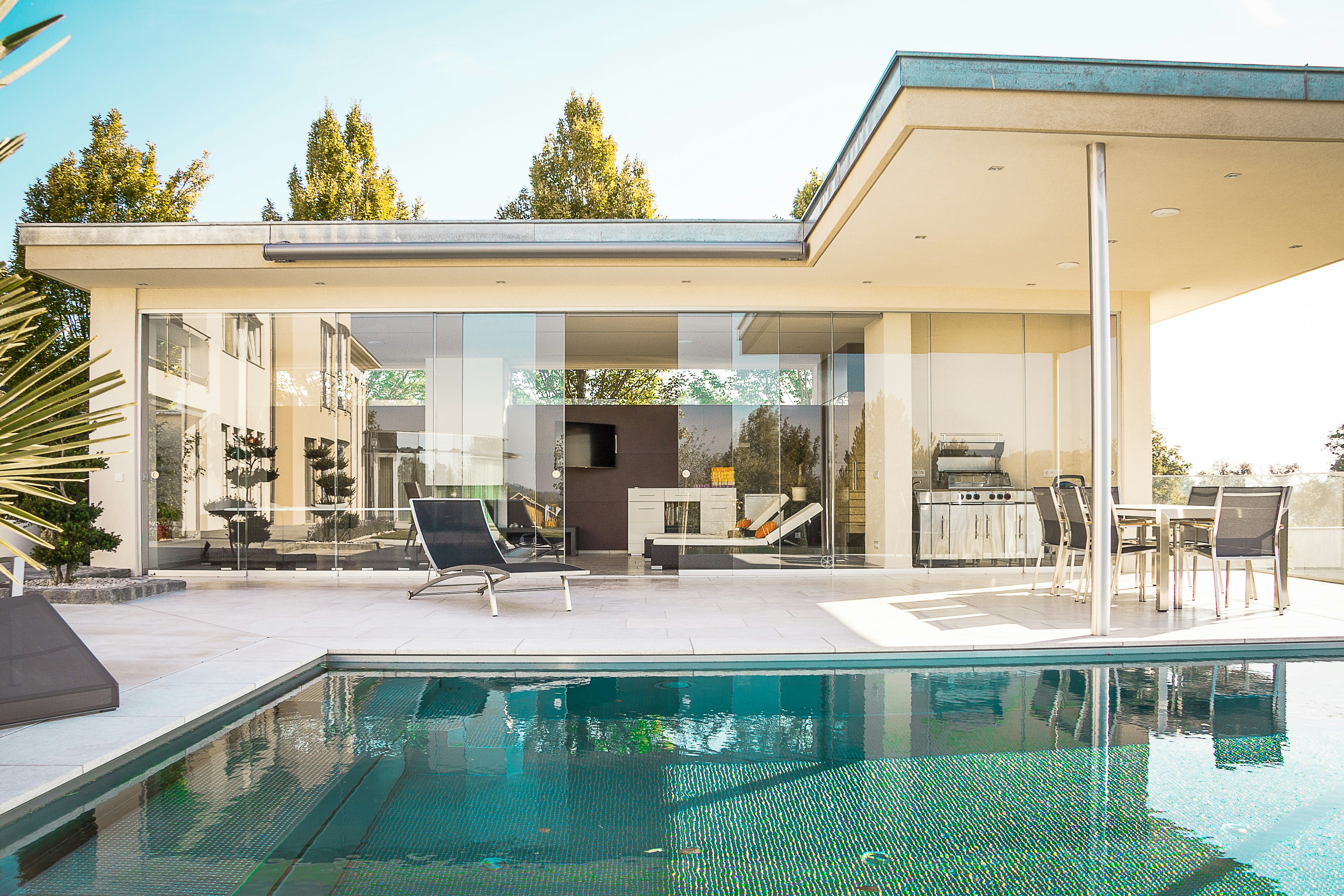
Let's make this concrete. Imagine you just bought a 3-bedroom, 2-bathroom Airbnb property in Scottsdale for $650,000. You spent another $40,000 furnishing it beautifully: nice beds, a quality kitchen setup, outdoor furniture, hot tub, and decor. Total investment: $690,000.
If you don't do a cost segregation study, here's your depreciation: the building ($650,000) depreciates at roughly 3.6% per year under straight-line depreciation over 27.5 years, giving you about $23,636 in annual depreciation deductions. The $40,000 in furniture? It also gets absorbed into the building for the same 27.5-year schedule. Your total first-year depreciation deduction: approximately $23,636.
Now, let's say you do a cost segregation study. The engineers determine that roughly $60,000 of the building cost represents 5-year and 15-year property (appliances, flooring, fixtures, landscaping, etc.), and the full $40,000 in furniture is 5-year property. That's $100,000 in component property right there. Let's say another $35,000 gets reclassified to 15-year land improvements (pool, patio, landscaping details).
Under bonus depreciation rules, that $100,000 in 5-year property gets fully deducted in Year 1. The $35,000 in 15-year property depreciates at about 3.33% per year, giving you roughly $1,166 in Year 1. So your total Year 1 deduction jumps to approximately $135,000 instead of $23,636.
At a combined federal and state tax rate of 37%, that's roughly $50,000 in actual tax savings in Year 1 from the cost seg study. The study cost you maybe $895. That's a return on investment of about 55x in the first year alone. And the deductions continue for the 15-year property in subsequent years. Even accounting for future depreciation recapture when you sell the property, the present-value tax savings are substantial.
How to Actually Claim These Deductions
Here's the beautiful part: it's actually simple. You don't need to hire an engineer to visit your property in person. You don't need to wait 6 weeks for a report. Modern cost segregation studies are conducted remotely using engineering databases, property valuation data, and standard building component assumptions based on your property type and acquisition cost.
Here's the process: You provide your property details—purchase price, description, any significant improvements or customizations. The cost segregation firm (like Cost Seg Smart) compiles this into an engineering report using established methodologies and IRS-approved valuation databases. Within 24 hours or a few business days, you receive a CPA-ready PDF report that breaks down your property component by component, with depreciation schedules.
You hand that report to your CPA. If you're doing a lookback study (claiming missed depreciation from a prior year), your CPA files a Form 3115 Application for Change in Accounting Method with the IRS. If you're applying it to your current-year return, your CPA simply applies the schedules to your depreciation schedules on your tax return. The IRS has pre-approved cost segregation methodologies, so as long as the study uses one of these standard approaches, you're on solid ground.

What About Properties You Bought Years Ago?
One of the best-kept secrets about cost segregation is that you don't need to use it only on new purchases. The IRS allows something called a "lookback study" or "catch-up study" if you've owned a property for years without having a cost seg study prepared.
Here's how it works: You can go back and file a Form 3115 with the IRS, claiming a change in accounting method, and retroactively claim the cost segregation benefits for prior years. All of that accumulated depreciation that you missed hits in your current tax return year. You don't need to amend prior returns individually. It all gets picked up when you file the 3115.
The IRS charges a small fee for the 3115 filing (usually $3,000-$5,000 depending on your situation), but for many investors, this is easily worth it. If you've owned an Airbnb for 3 years and never done a cost seg study, a lookback study could unlock $50,000+ in deductions hitting your current return. That's typically ROI-positive even after the 3115 filing fee.
Pro tip: If you own multiple Airbnb properties or other rental real estate, cost segregation studies on each property can combine to create massive tax savings. Many investors use their first-year deductions to offset income from other business activities.
The Bottom Line for Your Airbnb
If you own an Airbnb property and haven't done a cost segregation study, you're very likely leaving $15,000 to $50,000+ in first-year tax savings on the table. These aren't theoretical savings—they're real reductions in your tax liability, assuming your property is generating income to offset.
For a study that costs somewhere between $895 and $1,195, the ROI is almost impossible to beat. Even accounting for future depreciation recapture (the difference between the tax deductions you claim and the actual economic depreciation of the property, which gets recaptured as gain when you sell), the math strongly favors getting a study done sooner rather than later.
The tax code changes periodically. Bonus depreciation rules have sunset dates. Material participation rules can be complex. The longer you wait, the more you might lose out on these benefits. If you're serious about maximizing your Airbnb investment returns, a cost segregation study should be at the top of your tax planning checklist.
More from the Blog
Bonus Depreciation in 2026: What STR Investors Need to Know
100% bonus depreciation is back. Here's why 2026 is the most powerful year to do a cost segregation study.

Why We Built Cost Seg Smart
We're rental property investors who got tired of overpaying for cost seg studies. So we built something better.